

Trichology & Hair Loss · Clinical Education · Dubai
Conditions We Treat
Hair loss has many causes. Understanding yours is the first step toward treating it effectively. Every condition we see is approached with the same foundation — precise diagnosis, honest explanation, and evidence-based treatment.
Who Is a Trichology Consultation For?
A trichology consultation is appropriate for anyone experiencing any of the following:
Mechanism
Follicular shrinkage over time
Visibility
Often subtle until significant
Key window
Act while follicles remain active
Reversibility
High with early treatment

Androgenetic Alopecia
Androgenetic alopecia is the most prevalent form of hair loss worldwide. It affects up to 80% of men and 50% of women at some point in their lives, making it simultaneously the most common and the most frequently misunderstood type of hair loss.
Hair Thinning & Miniaturisation
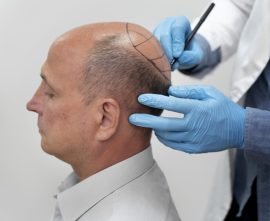
Hair thinning and follicular miniaturisation are often the earliest, most actionable signs that hair loss is developing yet they frequently go unaddressed because they are subtle. Many clients describe a gradual sense that their hair “isn’t what it was”: less volume, finer texture, reduced coverage, or a ponytail that doesn’t feel as thick as it once did. These are not imagined changes. They are the clinical manifestation of follicular miniaturisation a progressive biological process that, left untreated, will continue.
Hair Loss in Men
Male hair loss is extraordinarily common, yet it is often dismissed as an inevitable part of ageing something to be accepted rather than addressed. This is a missed opportunity. While androgenetic alopecia accounts for the majority of cases, male hair loss can stem from a wide range of causes, many of which are directly treatable.
Alopecia Areata
Alopecia areata is an autoimmune condition in which the body’s immune system mistakenly targets its own hair follicles, causing them to enter a prolonged resting phase and stop producing hair. Unlike androgenetic alopecia, which is driven by hormones, alopecia areata is immune-mediated and it can affect anyone, at any age, regardless of sex or family history, though genetic predisposition does play a role.
Hair Loss in Women
Female hair loss is significantly underdiagnosed and often undertreated. Many women are told their shedding is “just stress,” prescribed a multivitamin, and sent on their way without any real investigation into what is actually driving the loss.
Postpartum & Stress-Related Hair Loss
Postpartum hair loss is one of the most common and distressing hair conditions experienced by women — and yet it remains poorly understood and rarely addressed with the clinical attention it deserves It is a form of telogen effluvium: a condition in which a significant physiological stressor triggers a large proportion of hair follicles to simultaneously enter the resting (telogen) phase, leading to dramatic diffuse shedding several weeks or months after the triggering event.
Androgenetic Alopecia
Pattern Hair Loss: The Most Common — and the Most Treatable
Androgenetic alopecia is the most prevalent form of hair loss worldwide. It affects up to 80% of men and 50% of women at some point in their lives, making it simultaneously the most common and the most frequently misunderstood type of hair loss. It is driven by a combination of genetic predisposition and hormonal sensitivity — specifically, the reaction of hair follicles to dihydrotestosterone (DHT), a hormone derived from testosterone.
In genetically susceptible individuals, hair follicles in specific areas of the scalp carry receptors that respond negatively to DHT. Over time, this causes a process called miniaturisation — follicles progressively shrink, producing thinner and shorter hair with each cycle, until eventually they cease producing visible hair entirely. The pattern differs by sex: in men, it typically begins with a receding hairline at the temples and thinning at the crown, often progressing to complete baldness in advanced cases. In women, it usually presents as diffuse thinning across the top and front of the scalp, often with a noticeably wider parting line, while the frontal hairline itself is generally preserved.
One of the most important facts about androgenetic alopecia is that it is progressive — it will not resolve on its own. However, when identified early, the trajectory can be significantly altered. Treatment works best when follicles are miniaturising but still present, which is why a prompt and accurate diagnosis through trichoscopy is critical. Waiting until hair loss is visually obvious often means the treatable window has narrowed considerably
Pattern Hair Loss
Affects
Up to 80% of men, 50% of women
Cause
Genetics + DHT sensitivity
Onset
Can begin from late teens
Treatability
Excellent when caught early
When caught early, androgenetic alopecia responds well to treatment. The key is acting before follicles are permanently lost.
Gradual recession of the hairline at temples (men)
Thinning at the crown progressing forward (men)
Diffuse thinning across the top of the scalp (women)
Widening of the natural parting line (women)
Hair becoming progressively finer, shorter, lighter
Hair becoming progressively finer, shorter, lighter
High-resolution trichoscopy to assess follicular miniaturisation
Hair density mapping across scalp zones
Medical and family history assessment
Hormonal blood panel referral when indicated
Staging using Norwood (men) or Ludwig (women) scales
Hair Loss in Men
More Than Pattern Baldness — A Spectrum of Causes
Male hair loss is extraordinarily common, yet it is often dismissed as an inevitable part of ageing — something to be accepted rather than addressed. This is a missed opportunity. While androgenetic alopecia accounts for the majority of cases, male hair loss can stem from a wide range of causes, many of which are directly treatable. Without an accurate clinical diagnosis, men frequently spend years using over-the-counter products that address the wrong cause entirely.
Beyond genetic pattern baldness, male hair loss can be triggered by nutritional deficiencies — particularly iron, zinc, vitamin D, and B12 — which are extremely prevalent in Dubai's climate and lifestyle context. Thyroid dysfunction, elevated cortisol from chronic stress, scalp conditions including seborrheic dermatitis, and the use of certain medications can all drive significant shedding or progressive thinning. In some cases, multiple causes operate simultaneously, which is why a thorough assessment that considers both the scalp and broader health picture is essential.
Male clients often present later in the process — frequently only when hair loss has become visually obvious to others. Earlier intervention consistently yields better outcomes. A trichology consultation can identify the cause of your specific hair loss within a single comprehensive session, and map a realistic, personalised treatment protocol from there. Whether the goal is to halt progression, stimulate regrowth, or — where loss is advanced — restore the appearance of density through Scalp Micropigmentation, there are highly effective options available at every stage.
Male Hair Loss
Most common cause
Androgenetic alopecia (DHT)
Other causes
Stress, nutrition, thyroid, scalp conditions
Onset risk
1 in 2 men by age 50
Reversibility
High if treated early
Androgenetic alopecia (DHT-driven follicular miniaturisation)
Telogen effluvium from prolonged stress or illness
Nutritional deficiencies: iron, zinc, vitamin D, B12
Thyroid dysfunction (both hypo and hyperthyroid)
Scalp inflammation: seborrheic dermatitis, psoriasis
Medication-induced shedding
PRP therapy for follicular stimulation and density improvement
Exosome therapy for moderate to advanced androgenetic loss
Peptide mesotherapy for nutritional and scalp support
LLLT for non-invasive early-stage treatment
SMP for advanced baldness or scar camouflage
Hair Loss in Women
Complex, Deeply Personal — and Far More Common Than Most Women Know
Female hair loss is significantly underdiagnosed and often undertreated. Many women are told their shedding is "just stress," prescribed a multivitamin, and sent on their way — without any real investigation into what is actually driving the loss. The reality is that female hair loss is almost always multi-factorial, involving a combination of hormonal, nutritional, genetic, and sometimes autoimmune factors that require careful clinical unravelling.
Because women's hair loss rarely presents as the clean, patterned recession seen in men, it can be harder to detect and easier to dismiss — both by patients and by clinicians unfamiliar with trichology. Women typically experience diffuse thinning across the scalp, increased hair shedding (telogen effluvium), or a gradual reduction in hair density and shaft diameter. Hair may feel finer, take longer to grow, or simply seem "less" than it once was. These changes are real, they are progressive if untreated, and they deserve a serious clinical response.
Among the most common contributors to female hair loss are iron deficiency anaemia, thyroid imbalance (both hypo and hyperthyroid), polycystic ovary syndrome (PCOS), the hormonal fluctuations of perimenopause, postpartum shedding, and chronic stress-related telogen effluvium. Female pattern hair loss — androgenetic alopecia in women — is also far more common than generally recognised. A comprehensive trichology assessment, including bloodwork where indicated, is essential to map the specific causes and design an effective treatment strategy.
Prevalence
Affects 1 in 3 women
Peak onset
30s, postpartum, perimenopause
Often missed
Frequently misdiagnosed as stress
Complexity
Often multi-factorial
Iron deficiency — the most frequently overlooked cause
Thyroid dysfunction and hormonal imbalance
PCOS-related androgen excess
Perimenopausal and menopausal oestrogen decline
Postpartum telogen effluvium
Medication-induced shedding
Full trichoscopy and scalp assessment
Comprehensive medical and hormonal history
Blood panel referral: ferritin, thyroid, androgens, vitamin D
Assessment for scalp inflammation or autoimmune markers
Personalised multi-modal treatment protocol
Hair Thinning & Miniaturisation
The Silent Process Happening Long Before Hair Loss Becomes Visible
Hair thinning and follicular miniaturisation are often the earliest, most actionable signs that hair loss is developing — yet they frequently go unaddressed because they are subtle. Many clients describe a gradual sense that their hair "isn't what it was": less volume, finer texture, reduced coverage, or a ponytail that doesn't feel as thick as it once did. These are not imagined changes. They are the clinical manifestation of follicular miniaturisation — a progressive biological process that, left untreated, will continue.
Miniaturisation occurs when hair follicles are exposed to damaging signals — most commonly DHT in androgenetic alopecia, but also chronic inflammation, nutritional deficiency, or hormonal imbalance. Each hair growth cycle produces a slightly shorter, finer, less pigmented strand, until eventually the follicle produces only vellus hair (fine, almost invisible "baby" hair) or ceases production entirely. Crucially, this process is visible under trichoscopy before it becomes obvious to the naked eye — which is why a diagnostic consultation is so valuable at the first signs of thinning.
The single most important principle in treating miniaturisation is timing. A follicle that is miniaturising is still alive and still capable of recovery. A follicle that has been miniaturising for a decade and produced no visible hair for several years may be permanently fibrosed. Trichoscopy allows us to distinguish between these states and advise on realistic treatment expectations. For those with active miniaturisation, the treatment response with PRP and mesotherapy is excellent — and in many cases, meaningful regrowth of thicker, more robust terminal hair is achievable.
Progressive Thinning
Mechanism
Follicular shrinkage over time
Visibility
Often subtle until significant
Key window
Act while follicles remain active
Reversibility
High with early treatment
Hair feels finer, lighter, or less dense than before
Scalp becomes more visible in photographs or bright light
Ponytail or bun noticeably thinner in circumference
Increased hair in shower drain without obvious patches
Hair grows more slowly or stops reaching previous lengths
Personalised multi-modal treatment protocol
Peptide mesotherapy to nourish the follicular matrix
Exosome therapy for advanced or non-responsive miniaturisation
LLLT to support circulation and extend the anagen phase
Nutritional and lifestyle optimisation for systemic support
Alopecia Areata
When the Immune System Misidentifies Hair Follicles as a Threat
Type
Autoimmune condition
Presentation
Patchy, circular hair loss
Affects
All ages, both sexes equally
Recurrence
Can be episodic
Alopecia areata is an autoimmune condition in which the body's immune system mistakenly targets its own hair follicles, causing them to enter a prolonged resting phase and stop producing hair. Unlike androgenetic alopecia, which is driven by hormones, alopecia areata is immune-mediated — and it can affect anyone, at any age, regardless of sex or family history, though genetic predisposition does play a role.
It typically presents as one or more smooth, circular or oval patches of hair loss on the scalp, though it can affect any hair-bearing area of the body. In most cases the patches are sudden and unexpected — clients describe noticing them in the mirror or being told by a hairdresser. The condition can remain localised to a few patches (alopecia areata patchy), progress to complete scalp hair loss (alopecia totalis), or in rare cases affect hair across the entire body (alopecia universalis). Stress is a well-documented trigger for flares, though it does not cause the condition itself.
Because alopecia areata involves immune dysregulation rather than follicular damage, the follicles themselves remain alive beneath the surface — which is why spontaneous regrowth does occur in many cases, and why treatment that modulates the immune response and supports follicular recovery can be highly effective. Inflammation management is central to the treatment approach, alongside regenerative therapies that support follicular re-entry into the growth phase.
Autoimmune Hair Loss
Sudden, well-defined circular patches of hair loss
Exclamation mark hairs at patch borders (trichoscopy sign)
Yellow dots visible under trichoscopy at follicular openings
Tingling, itching, or mild tenderness before patches appear
Nail pitting or ridging (in some cases)
Anti-inflammatory scalp therapy to calm immune activity
PRP to stimulate follicular re-entry into anagen phase
Exosome therapy for immunomodulatory signalling support
SMP for long-standing patches or advanced cases
Referral for systemic treatment if clinically indicated
Postpartum & Stress-Related Hair Loss
Telogen Effluvium: When the Body Sheds After a Storm
Postpartum hair loss is one of the most common and distressing hair conditions experienced by women — and yet it remains poorly understood and rarely addressed with the clinical attention it deserves. It is a form of telogen effluvium: a condition in which a significant physiological stressor triggers a large proportion of hair follicles to simultaneously enter the resting (telogen) phase, leading to dramatic diffuse shedding several weeks or months after the triggering event.
During pregnancy, elevated oestrogen levels keep hair follicles in the active growth phase for longer than usual — which is why many women enjoy thicker, more abundant hair during pregnancy. After delivery, oestrogen levels drop sharply, and the follicles that were "held" in the growth phase all transition to the resting phase simultaneously. The result — typically appearing 6–12 weeks postpartum — is a sudden increase in hair shedding that can feel alarming. While telogen effluvium is in most cases self-limiting, recovery is far from guaranteed without nutritional support, and underlying deficiencies — particularly iron, which is frequently depleted during and after pregnancy — can significantly delay or prevent full regrowth.
Beyond postpartum triggers, telogen effluvium can be caused by any significant physical or psychological stressor: major illness, rapid weight loss, surgery, bereavement, burnout, or prolonged sleep deprivation. In Dubai's high-pressure professional environment, stress-related hair loss is increasingly common among both men and women. The key is to identify the triggering event, address any nutritional deficiencies driving the shedding, and support follicular recovery through targeted scalp treatments and regenerative therapy.
Telogen Effluvium
Type
Telogen effluvium
Onset
6–12 weeks after trigger
Pattern
Diffuse shedding across scalp
Recovery
Excellent with support
Childbirth and the postpartum hormonal shift
Chronic stress, burnout, and emotional trauma
Rapid weight loss or very restrictive dieting
Major surgery, illness, or hospitalisation
Thyroid dysregulation, nutritional insufficiency
Blood panel to identify and address nutritional gaps (iron, ferritin, D, B12)
Peptide mesotherapy to accelerate follicular re-entry into growth phase
Exosome therapy for immunomodulatory signalling support
LLLT for gentle, non-invasive scalp stimulation
Lifestyle and nutritional guidance to prevent recurrence
Contact us
Send a Message or Book Our Services